Vape battery charger: choosing and using one well
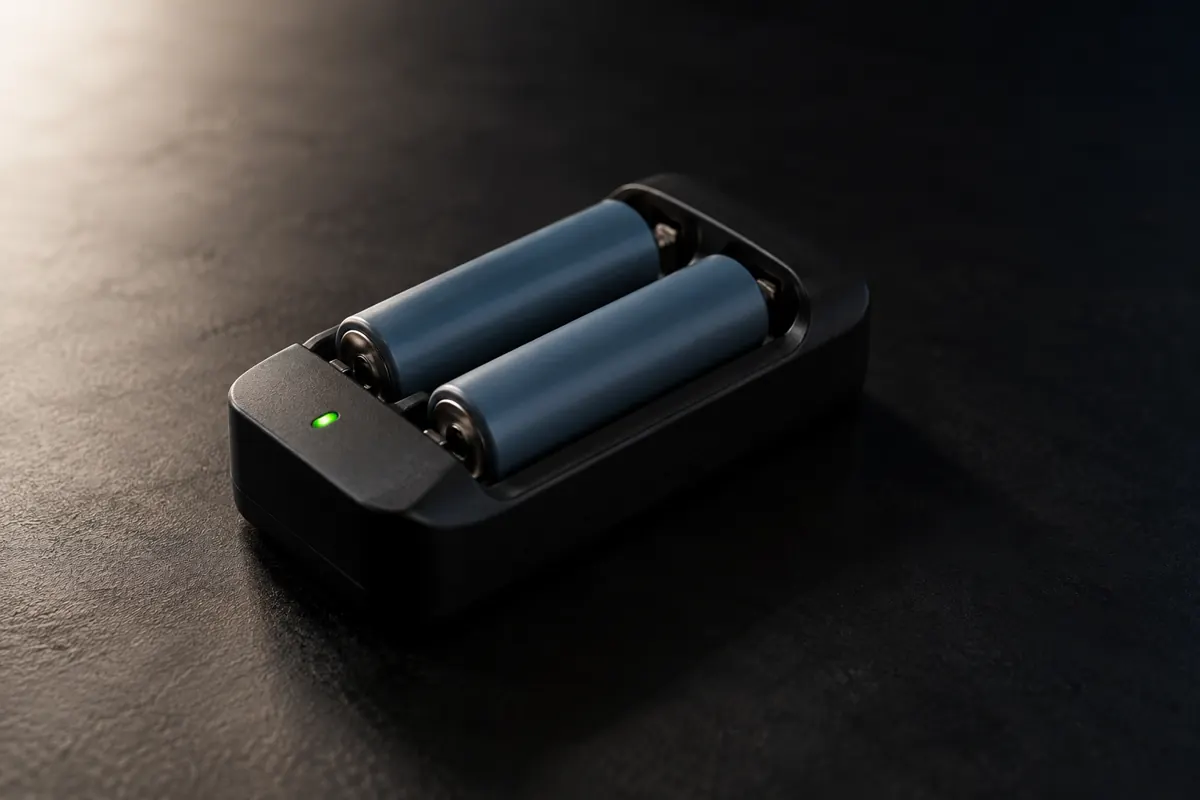
Plenty of British vapers buy a good cell and then refill it with whatever cable happens to be lying on the desk. That cable is the weakest link in the chain, and it decides how long those cells serve and how quietly they do it. A proper vape battery charger does not simply pour energy into a cylinder. It monitors it, treats each bay on its own terms and stops at the right moment. Here is what separates a real charger from a generic plug, and how to live with one.
What a vape battery charger has to get right
A vape battery charger is judged on four things: the formats it accepts, the number of bays, whether the charge current is adjustable, and the protections it runs while it works. A unit that covers all four looks after your cells considerably better than an anonymous mains block, and the gap shows up in how long those cells stay in the rotation.
Everything after that follows from your own stock of cells and how often you vape. Someone running a dual cell mod through a working day has different needs from someone topping up a single cell twice a week. The point of the shortlist is to stop you paying for capability you will never use, and to stop you buying something that cannot take the cells you own.
Accepted formats, the first filter
Before any question of comfort, the unit has to physically hold what you own. That compatibility sets the boundaries of the whole choice.
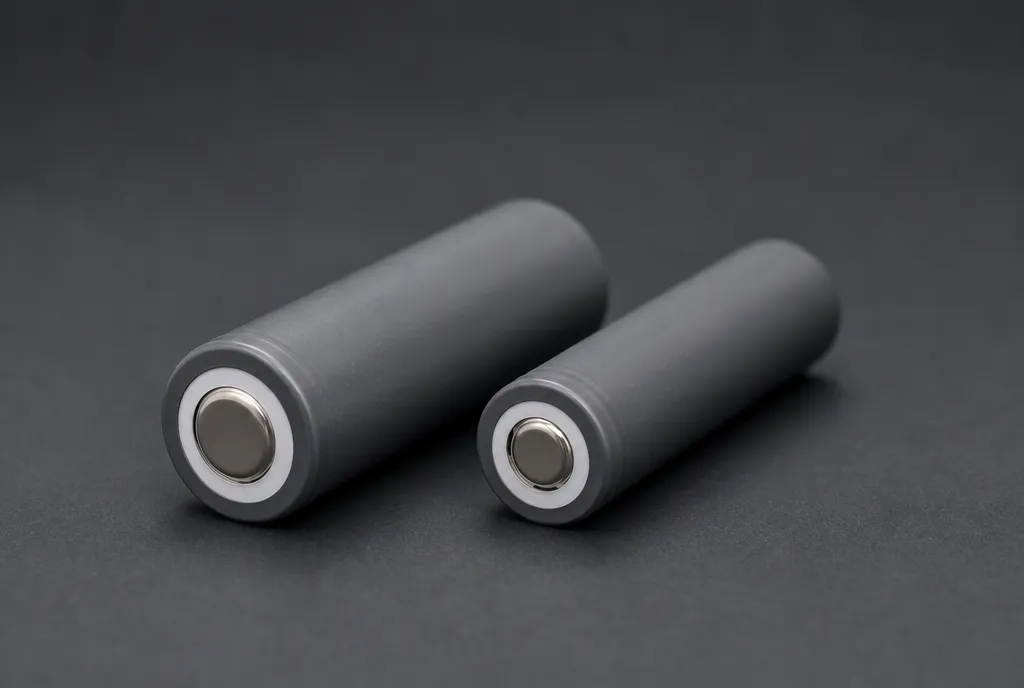
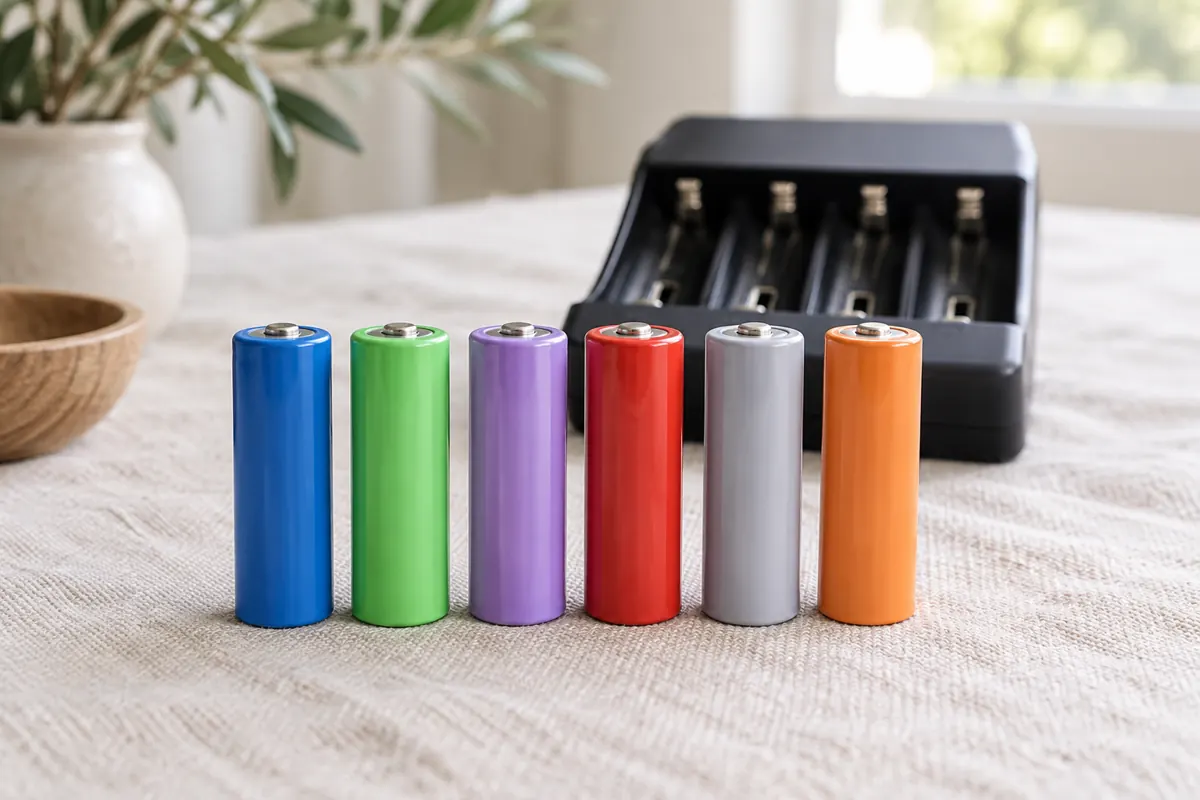
The formats that matter most in British vaping are the 18650, the 21700 and the 20700. Most general purpose chargers take all three thanks to spring loaded cradles that absorb the different lengths, but this is stated on the listing and worth reading rather than assuming.
If you already own larger cells, or expect to move up, a unit that covers the bigger format saves buying twice. There is a detail that catches people out: protected cells run a few millimetres longer because of their built in circuit, and a short cradle may not close on them. Measure what you actually own before ordering something compact. Our comparison of 21700 vs 18650 formats explains why those millimetres exist in the first place.
How many bays you actually need
A bay is one charging slot, and the count drives the size of the object, the kind of supply it needs and where it will end up living in your home.
One or two bays cover moderate use on a single cell or a pair, and the casing stays small enough to travel. Heavier vapers, and anyone running a dual cell mod, gain from three or four bays so the whole stock refills in one go rather than in shifts.
There is a second reason to charge a pair together on an external unit. Cells that live in a series mod need to stay closely matched, and treating them identically, in the same session, is the simplest way to keep them that way. Watch how the unit shares its output, though: many multi bay chargers split a fixed total across the occupied bays, so four cells charge together but each one charges more slowly than it would alone.
Charge current and the protections that matter
Not every charger fills a cell the same way, and this is where the better units earn their place. It is also where the internet dispenses the worst advice.
A quality vape battery charger lets you select the charge current per bay rather than applying one figure to everything. The correct figure is not a number you should take from a forum, from a video or from this page. It is the charging specification published by the company that manufactured the cell, found on that maker’s own technical sheet under the exact cell reference you own. That sheet is the only source that carries any weight, and reading it takes a minute.
The protections are the other half. A serious unit cuts off at the end of the charge, detects a cell inserted the wrong way round, and monitors temperature while it works. Those functions are invisible in daily use, which is exactly why they get overlooked on a component holding as much energy as a lithium cell does.
External charging or the mod’s USB port
Two methods coexist in every British household that vapes, and they are not equivalent. The distinction is worth making clearly.
Charging on a dedicated external unit remains the method that treats cells best, because the device exists for that single purpose and handles each bay individually. Charging through the mod’s own USB port is genuinely convenient when travelling, but it works through the device’s circuit and does not manage each cell separately, which matters most on a series mod where the pair has to stay balanced.
The sensible split is to make external charging the routine and the mod’s port the exception. Follow whatever the mod’s own manual says about its port rather than substituting a habit picked up elsewhere, since the manufacturer is the only party that knows what that circuit was designed to do.
Everyday habits around a vape battery charger
A good charger does not excuse careless use, and British safety guidance is consistent on the basics. These habits cost nothing and remove most of what goes wrong.
Charge at room temperature, on a hard surface that will not burn, and unplug once the charge completes rather than leaving cells sitting in the unit indefinitely. Do not charge overnight or anywhere you cannot see the device. Take any cell whose plastic wrap is torn, nicked or lifting straight out of the rotation, because an exposed cell body is a short circuit waiting for a coin to find it.
Keep spare cells in a rigid case rather than loose in a bag, and when a cell swells, runs warm for no reason or simply stops holding a charge, take it to a battery recycling point instead of the bin. Those points sit in most supermarkets and larger shops across the country. The full set of habits is laid out in our guide to vape battery safety.
Frequently asked questions
Can a vape cell be charged without a dedicated charger?
It is possible through the mod’s USB port, following that device’s own manual, but it is not the best routine for the cells. An external unit is preferable for regular use because it handles each cell individually and cuts off precisely at the end of the charge.
Will a phone charger do the job?
No. A phone mains block is not designed for the charging profile or the protections a lithium vaping cell requires. Use a charger built for the 18650, 20700 or 21700 formats, or the mod’s own integrated charging circuit where the maker provides one.
How long does a cell take to charge?
That depends on the charge current selected and on how depleted the cell is. A lower current takes longer and a higher one is quicker, and the value to use is the one published by the cell manufacturer. A correctly designed charger stops on its own once the charge is complete.
Should the cell come out of the mod to charge?
On an external battery mod, charging on a dedicated unit is the sounder routine, particularly with a matched pair. Some vapers use the mod’s port for convenience, but external charging remains the reference for keeping two cells balanced over time.
Does a four bay charger charge more slowly?
Often, yes. Many units share a fixed total output across the occupied bays, so the current per slot drops when all four are full. The specification sheet states the maximum per bay and how the unit behaves when several are in use.
Choosing a vape battery charger with your eyes open
The charger is the most underrated object in external battery vaping, and it quietly decides both how long your cells last and how uneventful their life is. Pick a unit that takes your formats, carries enough bays for your rotation, offers a selectable charge current and runs real protections, and a daily chore turns into something you stop thinking about.
The one habit worth carrying away is where the numbers come from. Set the current from the cell manufacturer’s published sheet for that exact reference, never from a wrap that may be a rewrap and never from a stranger’s recommendation. Pair a decent vape battery charger with that discipline, keep the wraps intact and the spares cased, and the cells that make every cloud will simply get on with the job. Which cell you put in it is a separate question, covered in our 18650 battery guide.
Editorial content for adult readers only. Vaping products usually contain nicotine, a substance that causes addiction. Not for sale to under-18s in the United Kingdom. This article is not a buying recommendation.